
Michigan's Mandated Senior Discount: How to Claim It in a $300/Mo State
Free to compare
Why Michigan Seniors Pay More Than Almost Any Other State
Michigan operates the most expensive auto insurance market in the United States, with average annual premiums exceeding $3,000 — nearly double the national average. Senior drivers aged 65–75 in metro Detroit and Flint frequently pay $250–$350 monthly for full coverage on a single vehicle, even with clean driving records.
The state's no-fault Personal Injury Protection (PIP) system drives these costs. Until recent reforms, Michigan required unlimited medical coverage with no cap, forcing every driver to subsidize catastrophic injury costs regardless of age or health insurance status. While 2019 reforms allowed seniors to opt down to lower PIP limits if they carry Medicare Parts A and B, many insurers still default renewals to the highest tier without proactive discussion.
For seniors on fixed retirement income, a $300/month insurance bill represents 15–20% of median Social Security benefits. The mature driver course discount — mandated by Michigan law but rarely advertised — becomes one of the few cost-reduction levers this audience can actually control.
Michigan's Mandated Mature Driver Discount: What the Law Requires
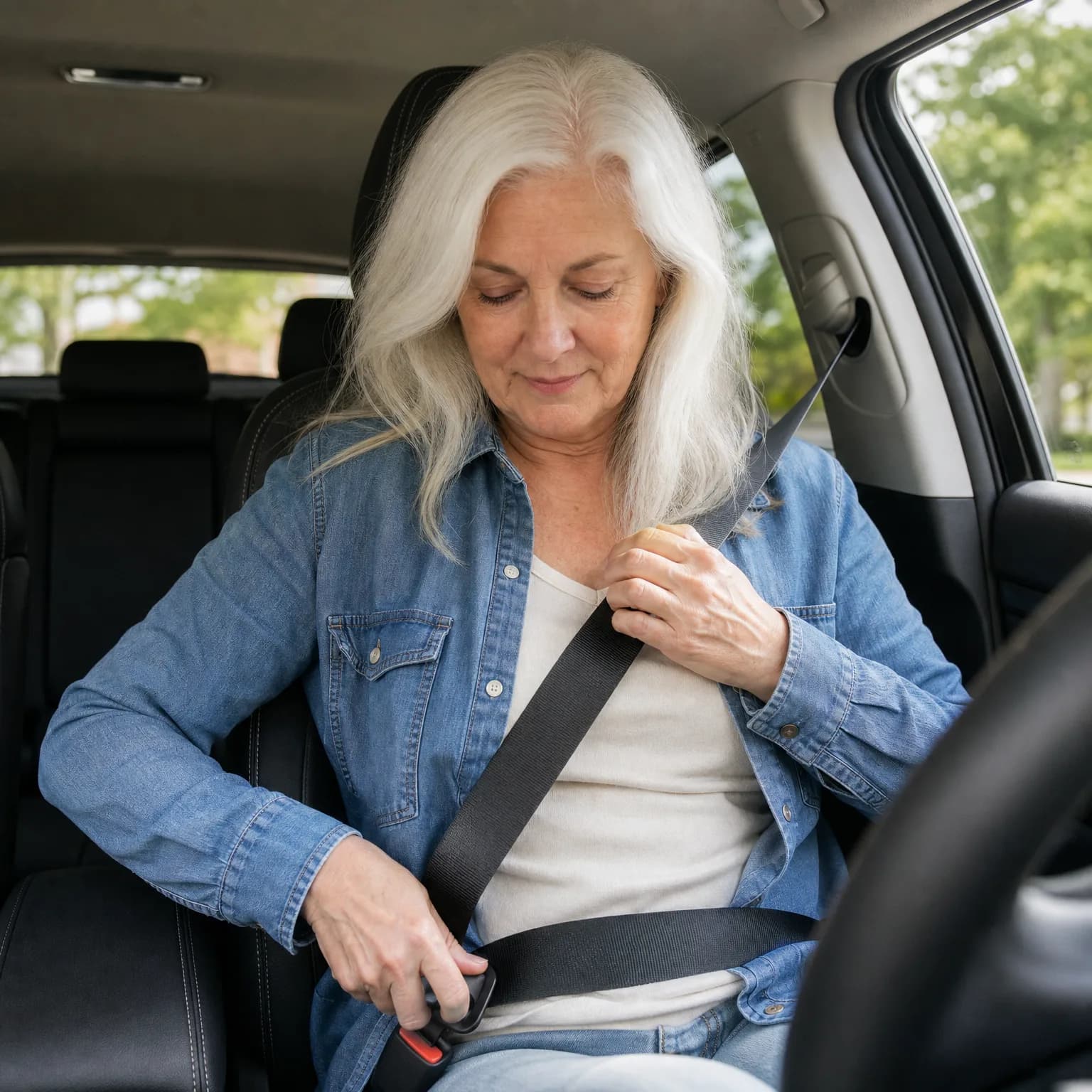
Michigan Insurance Code Section 500.2111a requires every auto insurer operating in the state to offer a premium discount to drivers aged 55 and older who complete an approved mature driver improvement course. The statute does not specify a minimum discount percentage, leaving carriers to set their own rates — typically 5–10% on liability, collision, and comprehensive premiums combined.
Approved courses include AARP Smart Driver (online and classroom), AAA Roadwise Driver, and National Safety Council Defensive Driving. Courses run 4–8 hours, cost $15–$35, and must be renewed every three years to maintain the discount. Certificates issued by unapproved providers — even if marketed as "senior driver courses" — do not satisfy the statute and will be rejected by carriers.
The mandate creates a legal obligation to offer the discount, but it does not require automatic application. Most carriers process the discount only when a policyholder submits a course completion certificate and explicitly requests the adjustment. Renewals do not flag eligibility, and customer service scripts rarely mention the program unless the caller asks directly.

How Much the Discount Actually Saves in Michigan's High-Cost Market
A 5% discount applied to a $3,200 annual premium saves $160/year. A 10% discount on the same premium saves $320/year. In metro Detroit, where full-coverage premiums for seniors frequently reach $3,600–$4,200 annually, a 10% mature driver discount translates to $360–$420 in annual savings — enough to cover three to four months of Medicare Part B premiums.
Discount percentages vary by carrier. State Farm and Auto-Owners typically offer 5–8%, while Progressive and Frankenmuth Mutual have historically offered closer to 10% for Michigan policyholders who complete approved courses. The discount applies to most coverage components except PIP, which is regulated separately under no-fault provisions.
Seniors who complete the course but fail to submit their certificate within 30–60 days of the completion date may lose eligibility for retroactive application. Carriers will apply the discount going forward from the request date, but they are not required to refund premiums for the period between course completion and certificate submission unless state complaint review forces the issue.
Which Mature Driver Courses Qualify Under Michigan Law
AARP Smart Driver is the most widely recognized program, available both online ($25 for AARP members, $30 for non-members) and in classroom format through local libraries and senior centers. The online version can be completed in one sitting or across multiple sessions, with automatic progress saving. Certificates are issued immediately upon completion and can be downloaded as PDFs for carrier submission.
AAA Roadwise Driver is accepted by all Michigan carriers and costs $20 for AAA members, $25 for non-members. The program includes interactive driving simulations and vision/reaction time assessments not present in AARP's curriculum. Certificates arrive by mail 7–10 business days after completion, which can delay discount application if submitted near a renewal date.
National Safety Council Defensive Driving courses qualify if they include the senior-specific curriculum module. Generic defensive driving courses — even from NSC — do not satisfy Michigan's mature driver statute. Seniors should confirm the course description explicitly states "mature driver" or "55+" before enrolling, as refund policies for non-qualifying courses vary by provider.

Keep Your Coverage Without Overpaying
Compare Senior Auto Insurance Rates
How to Submit Your Certificate and Actually Get the Discount Applied
Complete the course at least 30 days before your policy renewal date to ensure processing time. Download or request your certificate immediately — some providers charge $10–$15 for duplicate certificates if the original is lost. Contact your insurer's customer service line, state that you have completed an approved mature driver course under Michigan Insurance Code Section 500.2111a, and ask for instructions to submit the certificate.
Most carriers accept email submissions to a dedicated discount processing inbox, but some require faxed or mailed originals. Retain a copy of your submission confirmation or fax receipt. If you do not see the discount reflected on your next billing statement, call again and reference your submission date and confirmation number. Escalate to a supervisor if the first-tier representative cannot locate your request.
The discount should appear as a separate line item on your declaration page, labeled "Mature Driver Discount" or "Defensive Driving Discount." If it appears only as a generic "discount" without specificity, request written confirmation that it is the mature driver course discount and verify it will renew automatically for the next three years, subject to course re-certification.

When Michigan Seniors Should Consider Adjusting PIP Coverage Limits
Michigan's 2019 no-fault reform allows drivers with Medicare Parts A and B to opt down from unlimited PIP to $500,000, $250,000, $50,000, or complete PIP opt-out if coordinating with qualifying health insurance. Seniors who select lower PIP limits can reduce premiums by 20–40%, depending on carrier and county, but they assume greater exposure to out-of-pocket medical costs after exhausting the selected limit.
A senior with comprehensive Medicare Supplement (Medigap) coverage or Medicare Advantage with low out-of-pocket maximums may reasonably opt down to $50,000 or $250,000 PIP, particularly if they rarely drive outside Michigan and have no uninsured household members. Seniors with only Original Medicare Parts A and B should carefully review out-of-pocket exposure for extended rehabilitation or long-term care resulting from auto accidents, as Medicare does not cover all costs that unlimited PIP historically absorbed.
Carriers must offer PIP choice at every renewal, but many bury the selection in dense policy documents or default to the prior year's selection without active confirmation. Seniors who have added Medicare coverage since their last renewal should proactively request a PIP adjustment review and obtain premium quotes for each available tier before making a change.
Whether Low-Mileage Programs Work for Michigan Seniors
Low-mileage discount programs — offered by Progressive, Nationwide, and Safeco in Michigan — reduce premiums for drivers logging fewer than 7,500 annual miles, with deeper discounts at 5,000 and 3,000-mile thresholds. Seniors who no longer commute and drive primarily for errands, medical appointments, and occasional social visits often qualify for 10–25% reductions on usage-based pricing.
Progressive's Snapshot and Nationwide's SmartMiles require plug-in telematics devices or smartphone apps that track mileage, hard braking, and nighttime driving. While mileage reduction benefits seniors, hard braking and nighttime penalties can erode savings if the driver has slower reaction times or drives during early-morning medical appointments that trigger "nighttime" flags in the algorithm.
Seniors considering telematics should request a no-penalty trial period and confirm in writing that participation will not increase their rate above the non-telematics baseline. Michigan law does not prohibit telematics-based rate increases, so drivers who perform poorly on monitored behaviors may see net premium increases despite low mileage. Traditional low-mileage affidavit discounts — where the driver self-reports annual mileage without monitoring — remain available from Auto-Owners and Frankenmuth Mutual and carry no behavioral penalty risk.
Frequently Asked Questions
Do I need to retake the mature driver course every three years to keep the discount?
Yes. Michigan's mature driver discount expires three years from your course completion date, and carriers will remove it from your policy if you do not submit a new certificate. AARP and AAA both send renewal reminders 60–90 days before expiration if you completed their courses, but you are responsible for recertification — insurers are not required to notify you before removing the discount.
Can I get the mature driver discount if I'm under 55?
No. Michigan Insurance Code Section 500.2111a limits eligibility to drivers aged 55 and older. Drivers under 55 who complete defensive driving courses may qualify for separate discounts under some carriers' programs, but those are voluntary carrier offerings and typically provide smaller percentage reductions than the mandated mature driver discount.
Will my insurance company automatically apply the discount when I turn 55?
No. Age alone does not trigger the discount — you must complete an approved mature driver course and submit your certificate to your insurer with an explicit request for the discount. Most Michigan carriers do not proactively notify policyholders of eligibility, and renewals will continue at full price unless you take action.
Does the mature driver discount apply to my PIP premium in Michigan?
Typically no. Most carriers apply the mature driver discount only to liability, collision, and comprehensive premiums. Personal Injury Protection (PIP) is regulated separately under Michigan's no-fault statute, and discounts on PIP are controlled by your coverage tier selection rather than course completion. Check your declaration page to see exactly which premium components reflect the discount.
Can I take the mature driver course online or does it have to be in a classroom?
Both formats are accepted. AARP Smart Driver and AAA Roadwise Driver offer identical online and classroom versions, and Michigan insurers accept certificates from either format. Online courses allow you to complete the program at your own pace and receive certificates immediately, while classroom courses may be available free through local senior centers or libraries.
Related Articles

Mature Driver Discounts in Non-Mandate States (2025)
4/16/2026

Low-Mileage Insurance TX Retired Drivers
6/11/2026

Should Maine Seniors Drop Collision? Breakeven Guide
4/16/2026
WI Low-Mileage Insurance for Retirees
6/11/2026

Low-Mileage Carriers Retired Drivers GA
6/11/2026

Cheapest Auto Insurance CA Fixed Income
6/11/2026