
Low-Mileage Insurance for Retired Drivers — South Carolina
Free to compare
You Drive 4,000 Miles a Year and Pay Commuter Rates
You retired two years ago. Your annual mileage dropped from 12,000 to under 5,000. Your premium increased at the last two renewals anyway, and when you called your carrier to ask about a low-mileage discount, the agent said your policy already reflects your usage. It does not. Most South Carolina carriers still classify retired drivers under the mileage band and rate class assigned when the policy started, and annual mileage updates require a formal reclassification request you must initiate.
This article walks the three-step process to reclassify your policy for actual retirement mileage, clarifies what South Carolina's mature-driver discount statute requires versus what carriers market, and names which of the 21 carriers writing in South Carolina offer low-mileage programs to drivers over 65. The pathway is procedural, the savings are real, and the failure mode is that nothing happens unless you start the request yourself.
“South Carolina mandates the mature-driver discount but leaves the percentage to each insurer, and most require annual re-enrollment when your certificate expires.”

Keep Your Coverage Without Overpaying
Compare Senior Auto Insurance Rates21
SC Carriers Confirmed Writing
Twenty-one carriers are confirmed writing auto insurance in South Carolina as of current filings, spanning preferred, standard, and non-standard tiers. Twelve offer online quotes; nine require phone contact or broker access.
South Carolina Department of Insurance carrier licensure records
The Mature-Driver Discount Mandate Does Not Set an Amount
South Carolina Code §38-73-736 requires insurers to offer a discount to any driver who completes a state-approved defensive driving course. The statute does not fix a percentage. It mandates that carriers provide an "appropriate reduction" and leaves the amount to each insurer's filed rate structure. This is not an age-based discount. The statute is age-neutral: any nonyouthful operator who completes the course qualifies, and the reduction applies regardless of whether you are 55, 65, or 75.
The procedural consequence: every carrier writing in South Carolina sets its own discount percentage, files it with the state, and applies it only after you submit proof of course completion. Most carriers do not automatically re-apply the discount at renewal. The course certificate is valid for three years under most insurer rules, but when it expires, the discount disappears unless you re-enroll and submit a new certificate. The renewal notice will not tell you the discount lapsed. You will see the rate increase, call to ask why, and learn the certificate expired six months earlier.
Low-mileage reclassification operates on a separate track. The mature-driver discount reduces your base rate after course completion. Mileage reclassification changes the rating band your policy sits in, which affects the base rate itself before any discounts apply. You qualify for both, and both require separate requests. Neither happens automatically.
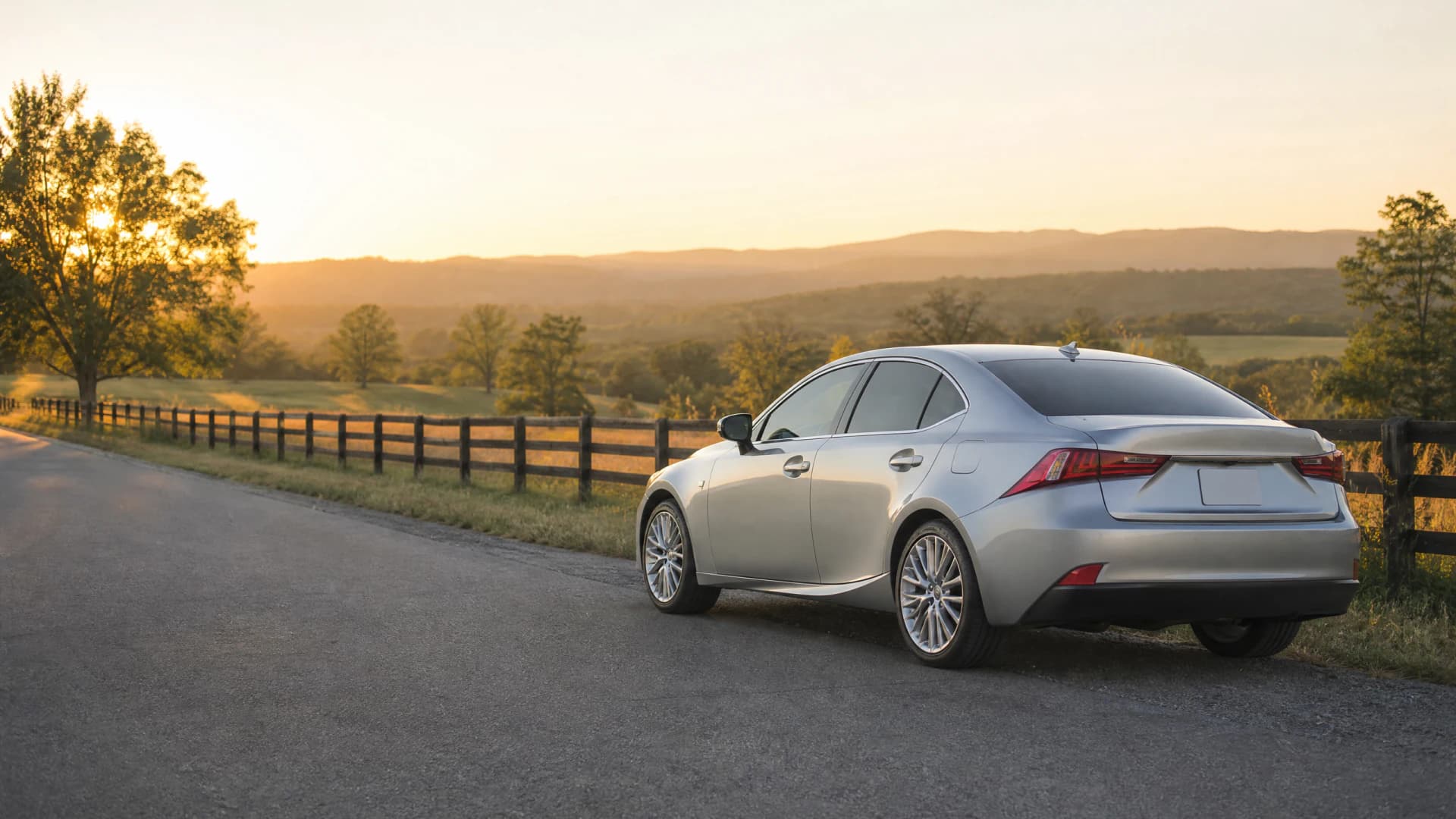
Most South Carolina carriers do not monitor your odometer or automatically reclassify you when mileage drops. The policy stays in the mileage band assigned at inception until you request a change.
Related Articles







Step Two: Request Mileage Reclassification in Writing
Verbal requests do not create a paper trail, and most South Carolina carriers process mileage changes only when the request arrives in writing with supporting documentation attached. Call your carrier first to confirm the submission method they accept: email to your agent with attachments, upload through the online account portal, or mail to the underwriting department. Ask for the specific email address or mailing address, and ask whether they require a signed reclassification form or whether a written statement in the body of the email suffices.
In your written request, state your current annual mileage, attach the odometer verification your carrier requires, and ask the underwriter to reclassify your policy to the mileage band matching your actual usage. Use this language: "I am requesting mileage reclassification based on verified annual mileage of [your number] miles. Please reclassify my policy to the appropriate mileage band and confirm the effective date of the rate adjustment." The explicit request for an effective date forces the carrier to state in writing when the new rate begins, which matters if they backdate the change to your last renewal versus applying it only at the next one.
Most carriers apply mileage reclassification at the next renewal, not mid-term. A few will prorate the adjustment and issue a mid-term credit if the mileage drop is significant. Ask explicitly whether mid-term adjustment is available when you submit the request. If the carrier applies the change only at renewal, ask when your next renewal date falls and set a calendar reminder 30 days before that date to confirm the reclassification processed. Underwriting delays happen, and the failure mode is that renewal arrives at the old rate because the reclassification request never reached the underwriter.

Low-Mileage Program Availability by Carrier Tier
Not all South Carolina carriers offer distinct low-mileage programs. Preferred-tier carriers such as USAA, Amica, and Auto-Owners build mileage into their standard rating algorithm and adjust rates when you request reclassification, but they do not market standalone low-mileage products. Standard-tier carriers including State Farm, Geico, Progressive, Allstate, and Nationwide offer named low-mileage discounts that trigger at specific annual mileage thresholds, typically 7,500 miles or below. The discount percentage varies by carrier and is not published; you learn the amount only after requesting reclassification and receiving the revised quote.
Pay-per-mile programs are not widely available in South Carolina as of current carrier filings. Metromile, the largest national pay-per-mile carrier, does not write in South Carolina. A few carriers offer telematics-based programs that reduce rates for low monthly mileage, but these programs also monitor speed, braking, and time-of-day driving patterns, and nighttime driving or hard-braking events can offset mileage savings for senior drivers who drive cautiously but occasionally brake hard to avoid hazards. Ask your carrier whether their telematics program penalizes or rewards low mileage in isolation, and whether nighttime or weekend driving affects the rate.
$25,000
SC Bodily Injury Minimum Per Person
South Carolina requires $25,000 bodily injury per person, $50,000 per accident, and $25,000 property damage as the liability floor. Retirement-era assets exposed in an at-fault accident often justify increasing liability limits above the state minimum.
South Carolina Code of Laws Title 38, Chapter 77
Collision Coverage on Paid-Off Vehicles: The Breakeven Question
If your vehicle is paid off and worth less than $5,000, the annual collision premium often exceeds the maximum claim payout you would receive after the deductible. This is the coverage-fit question every retired South Carolina driver on fixed income faces: does paying $400 annually for collision coverage on a $4,000 vehicle make financial sense when a total-loss claim nets you $3,500 after a $500 deductible? The math says no, but the decision depends on whether you can absorb a $4,000 replacement cost from savings without financial hardship.
Run this calculation with your current premium and vehicle value. Log into your policy and identify the collision premium line item. Multiply it by 12 to get the annual cost. Look up your vehicle's actual cash value using your state title, an online valuation tool, or the declared value on your policy declarations page. Subtract your collision deductible from the vehicle value to get your maximum net claim payout. If the annual collision premium equals or exceeds 25 percent of the net payout, dropping collision becomes a reasonable financial decision for most retired drivers whose budgets cannot absorb redundant insurance costs.
Before you drop collision, confirm that you carry comprehensive coverage and that your liability limits sit well above South Carolina's $25,000 per person minimum. Comprehensive covers theft, vandalism, weather damage, and animal strikes at a much lower annual cost than collision, and liability protects retirement assets in an at-fault accident. Never drop liability to save money. Drop collision only after the breakeven math confirms you are paying more annually than the coverage could ever return in a claim.

Request Both the Mature-Driver Discount and Mileage Reclassification
The two requests are independent. Completing a state-approved defensive driving course and submitting the certificate gets you the mature-driver discount South Carolina mandates. Documenting your annual mileage and requesting reclassification in writing moves your policy into the correct mileage band. Both reduce your premium, and both require separate actions you must initiate. Do not assume your carrier will apply either one automatically.
Start with mileage reclassification if your last renewal was recent and the next one is months away. The mature-driver course takes 4 to 8 hours to complete depending on the provider, and most carriers apply the discount at the renewal following certificate submission. If your renewal is 60 days out, enroll in the course now, complete it before renewal, and submit the certificate with your mileage reclassification request so both changes process at the same renewal cycle. If your renewal just passed, request mileage reclassification immediately and complete the mature-driver course within the next 90 days so the discount applies at your next renewal.
Write down your renewal date, the date you submitted the mileage reclassification request, and the date you submitted the mature-driver course certificate. Set a calendar reminder 30 days before your next renewal to call your carrier and confirm both changes processed. If either did not, you have 30 days to resolve the issue before the renewal notice generates. The failure mode every South Carolina senior driver encounters is that one or both requests never reached underwriting, renewal arrives at the old rate, and by the time you notice the increase it is six months later and the carrier tells you they cannot backdate the change.
Step One: Document Your Actual Annual Mileage
Call your carrier or log into your online account and ask what documentation they accept for mileage verification. Most South Carolina insurers accept one of three forms: a signed odometer disclosure statement you complete and upload, a photo of your current odometer reading paired with a photo from your last policy renewal showing the 12-month delta, or an in-person odometer check conducted by an agent during a policy review appointment. A few carriers integrate mileage verification into their mobile app and allow you to submit readings directly through the app interface. Write down which method your carrier accepts before you proceed.
If your carrier uses the odometer-photo method, take the current photo now and locate your renewal documents from 12 months ago. The two readings together prove your annual mileage. If you cannot locate last year's odometer reading, ask the carrier whether they have it on file from a prior telematics enrollment, claim, or inspection. Some carriers retain odometer data from earlier transactions and can calculate the delta without requiring you to produce the prior reading. If no prior reading exists, you will need to wait until the next renewal cycle to establish a 12-month baseline, unless the carrier accepts a signed statement for first-time reclassification requests.
Get Your Free Quote
Compare Senior Auto Insurance RatesFrequently Asked Questions
How much does the mature-driver discount save in South Carolina?
South Carolina Code §38-73-736 requires insurers to offer a discount for completing a state-approved defensive driving course, but the statute does not set a percentage. Each carrier files its own discount amount with the state. Ask your carrier what their mature-driver discount percentage is and confirm it applies after you submit your course certificate.
Do South Carolina carriers automatically apply low-mileage discounts at renewal?
No. Most South Carolina carriers classify policies by the mileage band assigned when the policy started and do not automatically reclassify you when annual mileage drops. You must request mileage reclassification in writing with odometer verification, and most carriers apply the change at the next renewal rather than mid-term.
Can I drop collision coverage on a paid-off vehicle in South Carolina?
Yes. South Carolina does not require collision coverage on any vehicle. If your vehicle is paid off and the annual collision premium exceeds 25 percent of the net claim payout after your deductible, dropping collision is financially reasonable for most retired drivers. Keep comprehensive and liability coverage in place.
Does the South Carolina mature-driver discount expire?
The course certificate is valid for three years under most South Carolina carrier rules. When it expires, the discount disappears unless you re-enroll in an approved course and submit a new certificate. Most carriers do not notify you when the certificate expires; you see the rate increase at renewal and must ask why.
Which South Carolina carriers offer online quotes for senior drivers?
Twelve of the 21 carriers confirmed writing in South Carolina offer online quotes: Geico, Progressive, State Farm, Allstate, Nationwide, USAA, Farmers, Liberty Mutual, Travelers, Hartford, The General, and Direct Auto. Nine carriers require phone contact or broker access, including Amica, Auto-Owners, and Erie.
What mileage threshold triggers low-mileage discounts in South Carolina?
Standard-tier carriers including State Farm, Geico, and Progressive typically apply low-mileage discounts at annual mileage below 7,500 miles. The discount percentage is not published and varies by carrier. Request reclassification when your verified annual mileage falls below this threshold and ask your carrier what discount applies.