
Cheapest Auto Insurance for Retirees on Fixed Income — California
Free to compare
Your Premium Increased Again Despite Clean Driving
You opened your renewal notice and saw another increase. No accidents. No tickets. Same car, same coverage, but the monthly payment climbed again. On fixed retirement income, watching your auto insurance premium rise every six months feels like being penalized for experience instead of rewarded for it.
California has a mature driver discount law, but here's what your insurer probably didn't tell you: the statute requires them to offer a discount for drivers 55 and older, but it does not set a percentage floor. Each carrier decides how much the discount is worth, and most won't apply it automatically at renewal. If you've never asked for it or submitted proof of a state-approved defensive driving course, you're paying the higher rate even though you legally qualify.
“California requires the discount but doesn't set the amount—one carrier's 5 percent is another's 15 percent, and most won't apply it unless you ask.”

Keep Your Coverage Without Overpaying
Compare Senior Auto Insurance Rates55+
California Mature Discount Age
California Insurance Code §11628.3 requires insurers to offer mature driver discounts starting at age 55, but the law does not fix the percentage—each insurer sets the amount. Most apply it only after you request it and submit proof of course completion.
CA Ins. Code §11628.3
What the Law Guarantees and What It Leaves to Carriers
California Insurance Code §11628.3 requires every auto insurer licensed in the state to offer a mature driver discount to policyholders aged 55 and older. That part is mandatory. What the statute does not do is tell the insurer how much the discount must be. The law says the insurer sets an "appropriate percentage," which means the discount amount varies widely by carrier.
Some carriers offer the discount based on age alone. Others require completion of a state-approved defensive driving or mature driver improvement course. The course-completion pathway tends to deliver a larger discount, but only if the course provider is on California's approved list. If you took a course through a provider not approved by the state, your carrier can refuse to apply the discount even if you completed the hours.
Because the discount amount is not standardized, you cannot assume your current carrier's mature driver discount is competitive. One carrier might offer 5 percent off your liability premium; another might offer 15 percent across all coverages. The only way to know what you're actually getting is to ask your agent for the exact discount percentage applied to your policy, then compare that figure against quotes from other carriers writing in California.

Most carriers won't apply the mature driver discount at renewal unless you submit a state-approved course completion certificate. The discount doesn't auto-renew with your policy—it expires when the certificate does, typically every three years.
Related Articles






Low-Mileage and Pay-Per-Mile Programs for Retired Drivers
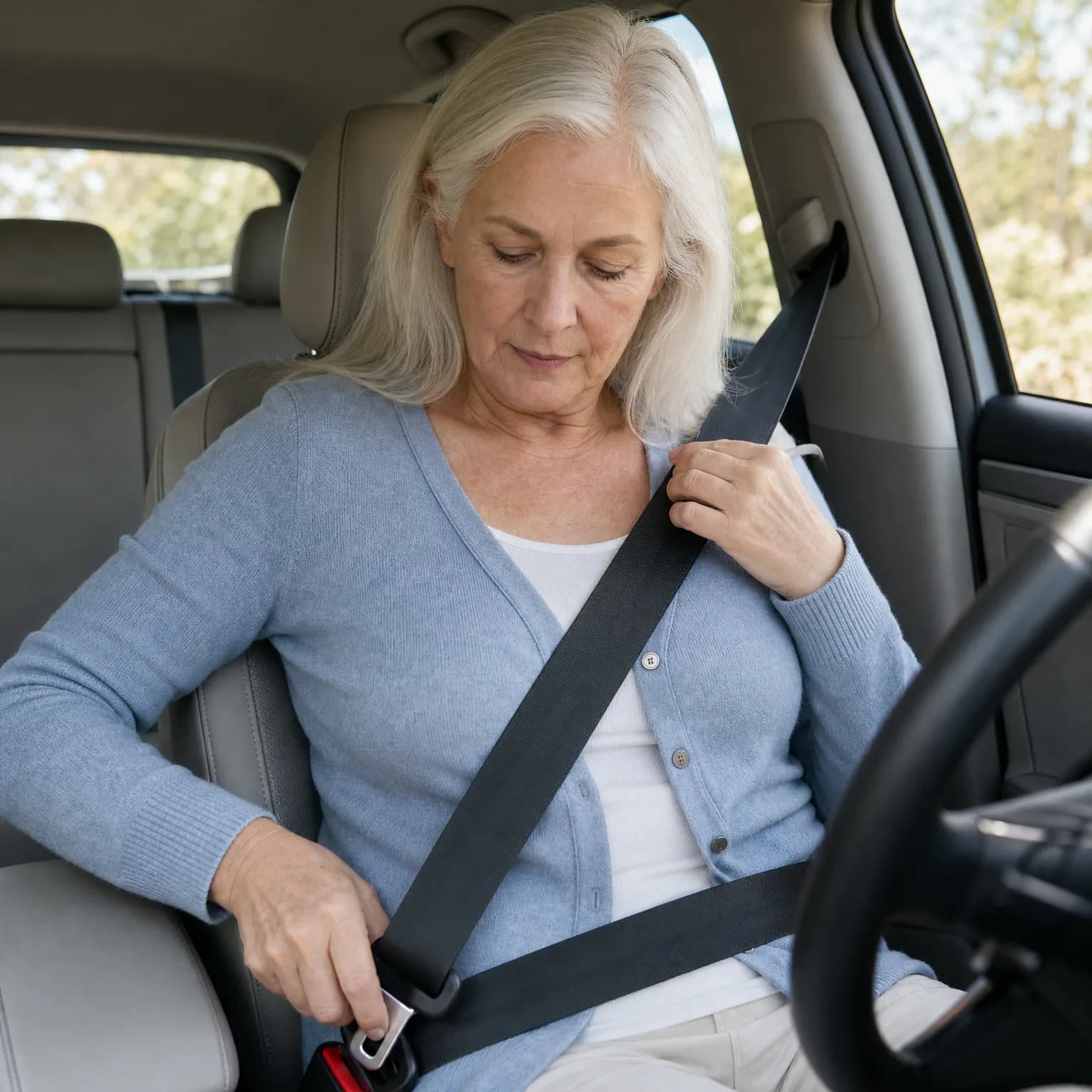
If you're driving significantly fewer miles in retirement than you did during your working years, you're likely overpaying. Most carriers classify drivers by annual mileage bands: commuter, pleasure, or low mileage. The low-mileage threshold varies by carrier, but it typically starts around 7,500 miles per year. If you're driving under that threshold, ask your carrier to reclassify your usage. This is a separate discount from the mature driver discount and stacks with it.
California is one of 14 states where pay-per-mile insurance is available. Programs like Metromile and Mile Auto charge a low monthly base rate plus a per-mile rate, typically between 5 and 7 cents per mile. If you drive fewer than 5,000 miles annually, pay-per-mile can cost less than half of a traditional policy. The trade-off: you install a telematics device or use a phone app that tracks every mile. If your mileage increases unexpectedly, your cost rises immediately.
Before switching to pay-per-mile, calculate your actual annual mileage. Check your odometer readings from your last oil change or maintenance record. Multiply your average monthly mileage by 12, then compare that figure against the pay-per-mile rate structure. For most retirees driving under 4,000 miles per year, the math strongly favors pay-per-mile. Between 4,000 and 7,500 miles, traditional low-mileage classification usually costs less.
One warning about telematics programs marketed as discount opportunities: most telematics programs track not just mileage but also braking patterns, acceleration, speed, and time of day. Some carriers penalize night driving or driving during high-traffic hours. If you drive at night or during commute windows for any reason—medical appointments, family visits, errands—telematics programs can increase your rate instead of lowering it. Pay-per-mile programs track mileage only, not driving behavior, which makes them safer bets for retirees.
$15,000
California Property Damage Minimum
California requires $15,000 property damage liability, the lowest tier in the state. If you cause an accident involving a newer vehicle, $15,000 won't cover the repair or replacement cost, and your retirement assets become exposed to lawsuit. Retirement-era liability decisions must account for what you own, not just what the state requires.
California DMV financial responsibility requirements
Coverage Fit Decisions When You Own Retirement Assets
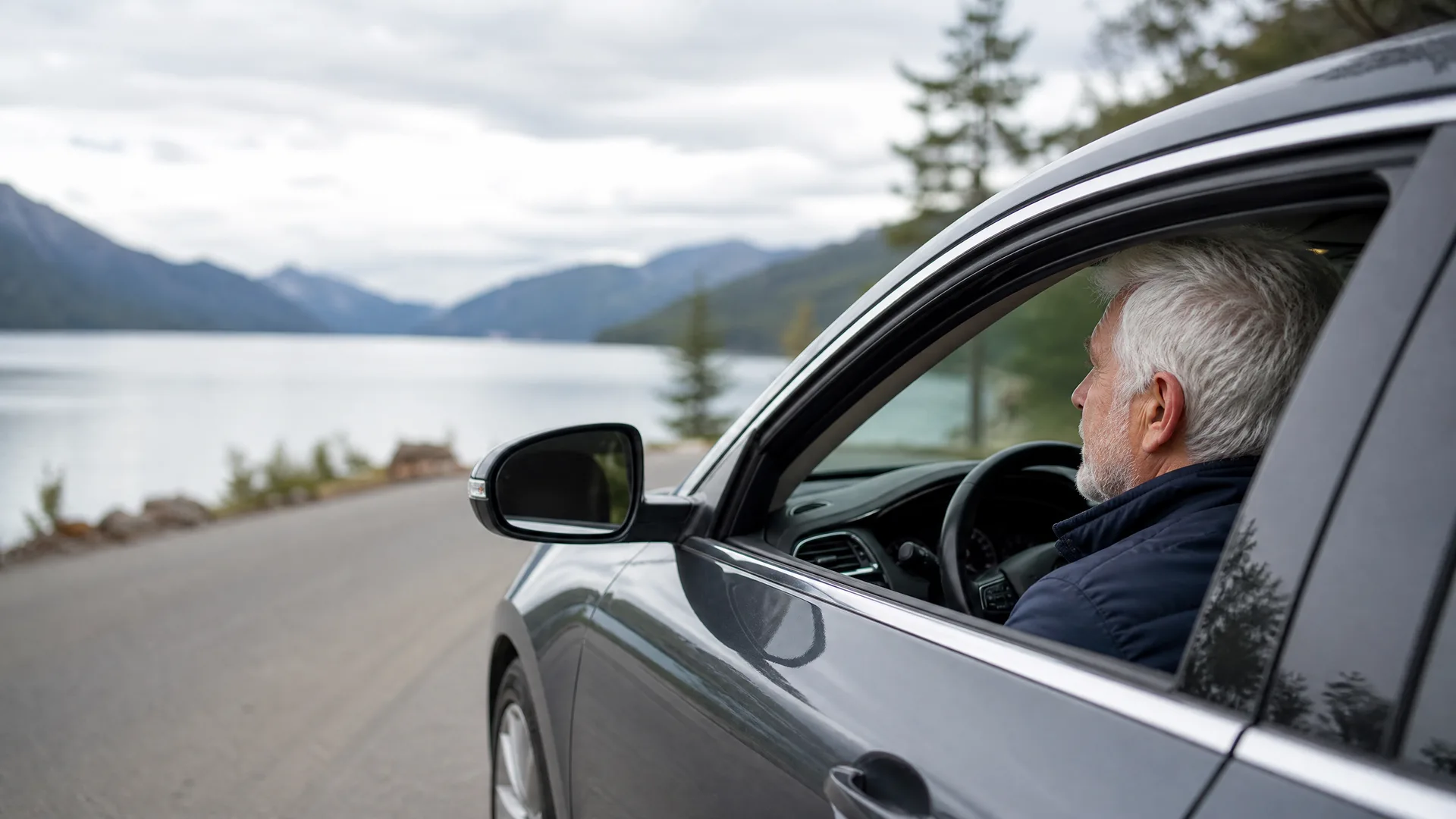
California's minimum liability limits are $15,000 property damage, $30,000 bodily injury per person, and $60,000 bodily injury per accident. Those minimums were set decades ago and have not kept pace with vehicle values or medical costs. If you cause an at-fault accident and your liability coverage doesn't cover the damage, the other party can sue you personally. Retirement accounts, home equity, and savings are all at risk in that scenario.
The rule of thumb: carry liability limits at least equal to your net worth. If you own a home with equity, carry $100,000 property damage minimum and $250,000/$500,000 bodily injury. If your net worth exceeds $500,000, consider umbrella coverage on top of your auto policy. This is not an upsell—this is asset protection. A single at-fault accident with minimum liability coverage can wipe out decades of retirement savings.
The collision and comprehensive decision is different. If your vehicle is paid off and worth less than ten times your annual collision premium, dropping collision usually makes financial sense. Calculate it: if your collision premium is $600 per year and your car is worth $5,000, you'll pay $6,000 over ten years to insure a car that depreciates to near zero. Keep comprehensive for theft, fire, and weather damage—it's cheap—but dropping collision on older paid-off vehicles redirects premium dollars toward higher liability limits where they protect your actual financial exposure.
Bundling Home and Auto in California
Bundling home and auto with the same carrier delivers a discount, but the bundling discount is not always larger than the savings you'd get by splitting policies between two carriers and claiming the mature driver discount on auto separately. The only way to know is to quote both ways. Request an unbundled auto quote with the mature driver discount applied, then compare it against your current bundled rate.
California's home insurance market has contracted significantly since 2022 due to wildfire risk. Some carriers have stopped writing new homeowners policies or are non-renewing existing ones in high-risk ZIP codes. If your home insurer non-renews you and you're forced into the FAIR Plan, your auto policy won't bundle with it. That makes it critical to price your auto coverage independently now rather than assuming your bundle will remain intact.
Compare Carriers Writing Senior Profiles in California
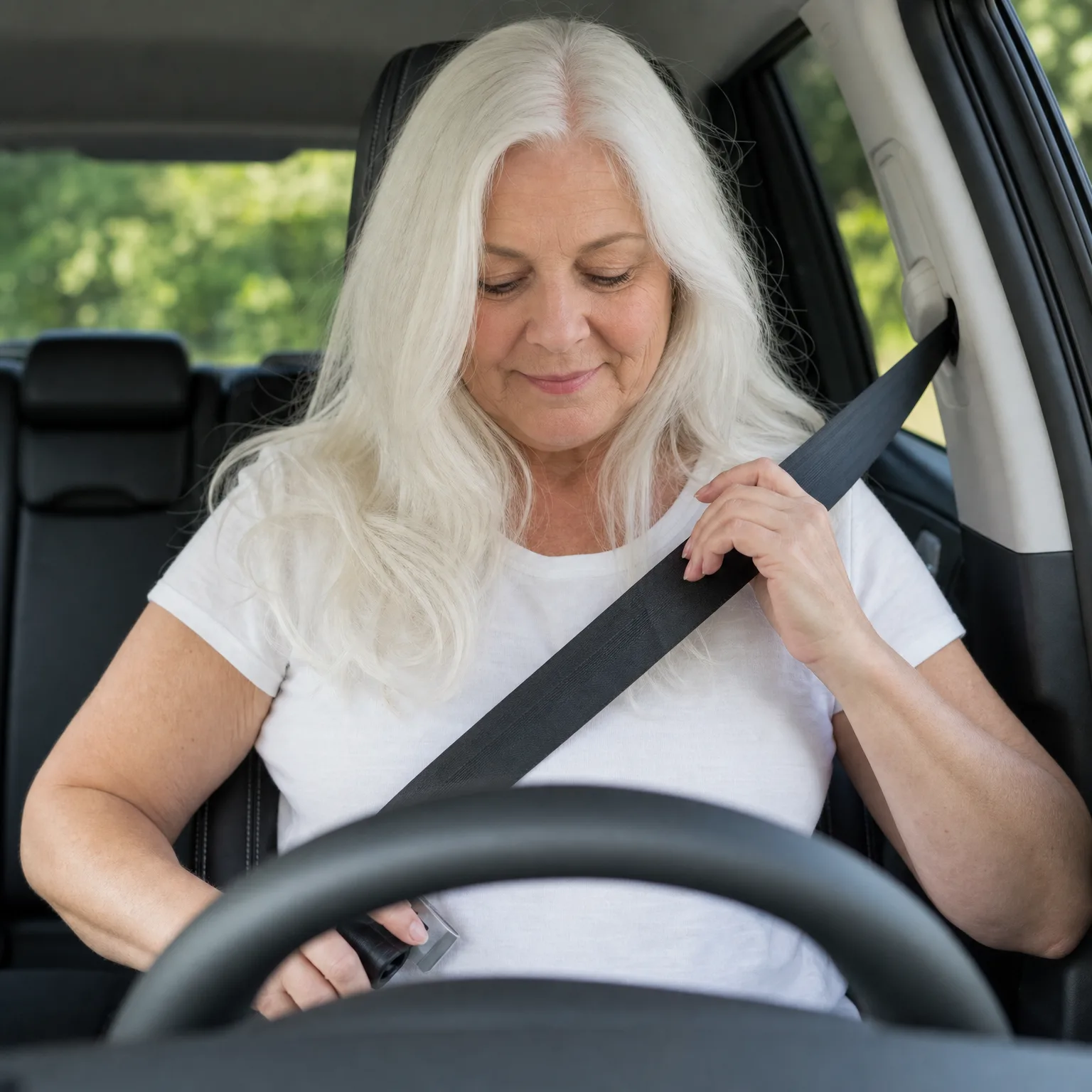
California's auto insurance market includes 20 major carriers writing policies for drivers 55 and older. Some specialize in preferred-tier drivers with clean records; others write non-standard policies for higher-risk profiles. For mature drivers with clean records and low mileage, preferred-tier carriers like State Farm, USAA, and Amica typically offer the lowest rates once the mature driver discount and low-mileage classification are applied. Standard-tier carriers like Geico, Progressive, and Nationwide also write mature driver policies and offer online quoting.
Request quotes from at least three carriers. Provide your actual annual mileage, ask each carrier what mature driver discount percentage they apply, and confirm whether they require course completion or offer the discount based on age alone. Compare the final premium with all discounts applied, not the base rate. The carrier offering the lowest base rate may not be cheapest after discounts.
When you request a quote, ask the agent or online tool to confirm your mileage classification. If you're classified as a commuter but you drive fewer than 7,500 miles per year, the quote is wrong and you'll overpay from day one. Correct the classification during the quoting process, not after you bind coverage.
State-Approved Course Requirements and Where Certificates Fail
Carriers accept courses approved by their underwriting guidelines, which typically means courses certified by recognized organizations like AARP, AAA, or the National Safety Council. Some insurers accept online courses; others require classroom attendance. Before you pay for a course, call your carrier and ask for the names of approved providers they will accept for the mature driver discount. Do not assume the first online course you find will count.
Once you complete an approved course, you receive a certificate with an expiration date, usually valid for three years. That certificate must be submitted to your carrier before your next renewal to trigger the discount. If the certificate expires before your renewal date and you don't renew the course, the discount disappears. Your carrier will not notify you that the discount has lapsed—it simply stops appearing on your bill. Check your certificate expiration date now and mark your calendar to retake the course at least 60 days before it expires.
Get Your Free Quote
Compare Senior Auto Insurance RatesFrequently Asked Questions
Does California require auto insurers to offer mature driver discounts?
Yes. California Insurance Code §11628.3 requires all auto insurers licensed in the state to offer a mature driver discount to policyholders aged 55 and older. The statute does not set a percentage floor, so each insurer decides the discount amount. Most carriers require completion of a state-approved defensive driving course to apply the discount.
How much does the California mature driver discount save on auto insurance?
The discount percentage varies by carrier because California law does not fix the amount. Some carriers offer 5 percent off liability premiums; others offer 15 percent across all coverages. The only way to know your carrier's discount is to ask your agent for the exact percentage applied to your policy.
What mileage threshold qualifies for low-mileage discounts in California?
Most California carriers classify drivers as low mileage if they drive fewer than 7,500 miles per year. Some carriers set the threshold at 5,000 miles. If you drive fewer miles in retirement than you did while working, ask your carrier to reclassify your usage. This discount stacks with the mature driver discount.
Should California retirees on fixed income drop collision coverage?
If your vehicle is paid off and worth less than ten times your annual collision premium, dropping collision usually makes financial sense. Keep comprehensive coverage for theft and weather damage—it's inexpensive. Redirect the premium savings toward higher liability limits to protect your retirement assets from lawsuit exposure.
Do California mature driver course certificates expire?
Yes. Most mature driver course certificates are valid for three years. If your certificate expires before your renewal date and you don't retake the course, the discount disappears from your policy. Carriers do not notify you when the discount lapses—it simply stops appearing on your bill.
Are pay-per-mile insurance programs available in California?
Yes. California is one of 14 states where pay-per-mile auto insurance is available. Programs like Metromile and Mile Auto charge a low monthly base rate plus a per-mile rate, typically 5 to 7 cents per mile. If you drive fewer than 5,000 miles annually, pay-per-mile often costs less than half of a traditional policy.
What liability limits should California retirees carry?
California's minimum liability limits ($15,000 property damage, $30,000 bodily injury per person, $60,000 per accident) have not kept pace with vehicle values or medical costs. Carry liability limits at least equal to your net worth. If you own a home with equity, carry at least $100,000 property damage and $250,000/$500,000 bodily injury to protect retirement assets from lawsuit exposure.